
Attorney PPC: A Practical Guide for Law Firms That Want Real Cases
Attorney PPC is paid search advertising on Google and other platforms where your law firm bids to appear when someone searches for legal help. Done well, it puts your firm in front of a person with a problem and a need for a lawyer right now. Done poorly, it burns thousands of dollars a month on clicks that never become clients.
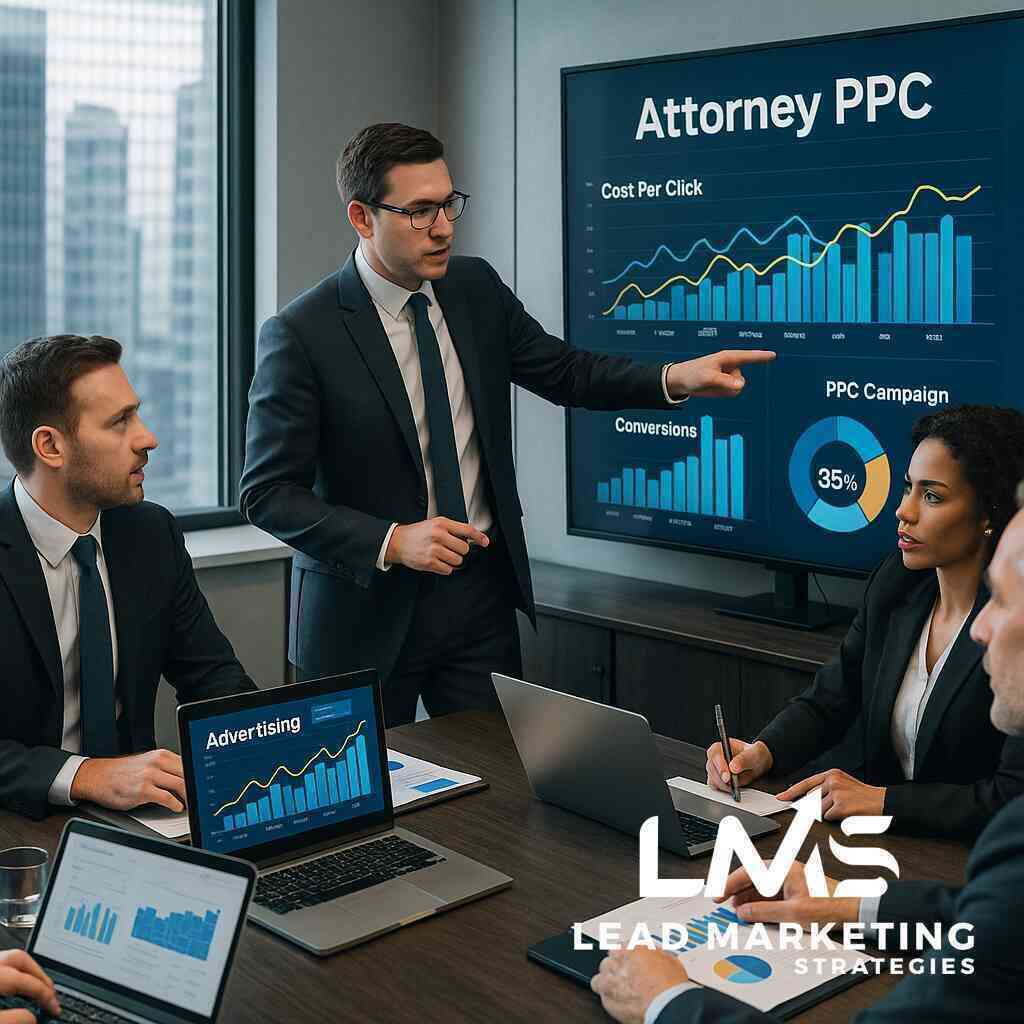
This attorney PPC guide covers what actually works in 2026: how to structure campaigns, control costs, protect your budget from fraud, and track the cases you win, not just the leads you collect. We work with law firms every day on exactly this, and we have seen what separates a profitable account from an expensive one.
What Is Attorney PPC and Why Does It Matter for Law Firms?
Attorney PPC is the practice of buying sponsored placements in search results and on ad networks to attract potential clients. You pay per click, and you compete against other firms bidding on the same searches. Legal is one of the most expensive advertising categories in the world, which means precision matters more here than almost anywhere else.
Why it matters: search traffic is intent-driven. Someone typing “personal injury lawyer near me” after an accident is not browsing. They need help. Paid search lets you reach that person within minutes instead of waiting months for organic rankings. It also lets you test messaging, practice areas, and landing pages fast, which is hard to do with SEO alone.
The catch is that legal keywords are brutally competitive. Personal injury clicks can run into the hundreds of dollars. That cost only makes sense if your intake process converts and you can track which campaigns produce signed cases.
Why Is My Law Firm’s PPC Cost-Per-Click So High?
Your CPC is high because other firms are willing to pay a lot for the same click, and Google charges based on competition and Quality Score. In legal, demand is high, budgets are large, and a single case can be worth tens of thousands of dollars. That pushes bids up across the board.
But high CPC is not the whole story. In our experience, three things drive up cost more than competition alone:
- Weak Quality Score. If your ads and landing pages do not match the search closely, Google charges you more per click. Tight ad groups and relevant landing pages lower your cost.
- Broad, lazy keyword lists. Bidding on generic terms like “lawyer” pulls in people who are not ready to hire. Narrow, intent-rich keywords cost less per click and convert better.
- Poor account structure. Mixing practice areas, locations, and case types in one campaign makes it impossible to bid intelligently. Structure drives efficiency.
You cannot control what competitors bid. You can control relevance, structure, and targeting. That is where real savings live, and it is a big part of why our proven PPC strategies for law firms focus on account hygiene before budget increases.
How Much Budget Does a Law Firm Need for Google Ads in 2026?
There is no universal number, but a workable starting point for a competitive practice area is often several thousand dollars per month, and personal injury in a major metro can require far more. The honest answer is that your budget should be set by your cost per signed case, not by a round number you picked in a meeting.
Here is how we think about it:
- Know your cost per case. If a signed case is worth $5,000 to your firm and you close one in ten leads, you can afford a meaningful cost per lead. That math sets your ceiling.
- Start narrow. Launch with your highest-value, highest-intent keywords in your best-performing location. Prove the model before you scale.
- Protect the floor. Set daily budgets and bid caps so a single bad day cannot drain the month. Legal CPCs are too high to run without guardrails.
Firms that treat budget as a fixed expense tend to underfund the campaigns that work and overfund the ones that do not. Firms that treat it as an investment tied to case value scale with confidence. If you want a clearer picture of how budget and profit connect, our breakdown of boosting legal PPC profits walks through the math.
Should My Law Firm Use Google Local Services Ads or Traditional PPC?
Use both. Local Services Ads (LSAs) and traditional Google Ads serve different jobs, and running them together is one of the most reliable ways to dominate the top of the search page.
LSAs are pay-per-lead and appear above the standard ads, often with a Google Screened badge. They reward responsiveness, proximity, and reviews. Traditional PPC gives you more control over messaging, landing pages, and targeting, and it works for practice areas LSAs do not fully cover.
The hybrid approach works because it captures attention in two places at once. Someone who scrolls past the LSA three-pack still sees your text ad. Someone who ignores text ads may click the LSA. You are covering the real estate instead of ceding it to competitors.
To win the LSA three-pack, focus on three things: a strong review profile, fast response to leads, and accurate service area settings. A firm that answers leads within minutes and maintains a healthy star rating will usually outperform a firm that bids more but responds slower.
How Do You Make AI Bidding and Performance Max Work for a Law Firm?
AI bidding works when you feed it the right signals. It fails when you ask it to optimize for the wrong thing. Google’s automated bidding is now standard, but without guardrails it will happily spend your budget chasing cheap, low-value conversions.
Use Value-Based Bidding to Teach the Algorithm What a Case Is Worth
Most firms optimize for form fills. That is a mistake. A form fill from a fender-bender is not the same as one from a catastrophic injury case. Value-based bidding lets you assign different values to different conversion types so the algorithm learns to pursue the cases that matter.
This requires clean CRM data flowing back into Google. When your intake team tags leads by case type and value, you can pass that signal to the platform. Over time, bidding shifts toward higher-value opportunities. That single change often does more for profitability than raising budget.
Run Performance Max With Real Guardrails
Performance Max can work for law firms, but only with tight controls. In our experience, the firms that struggle with PMax are the ones that let it run without exclusions. Use account-level negative keyword lists, exclude irrelevant placements, and feed it strong creative and audience signals. Review search term reports regularly and cut what does not fit.
Pair Broad Match With Strict Negatives
Broad match plus smart bidding can uncover long-tail, high-intent searches you would never think to bid on. But it needs a disciplined negative keyword list. Build one around your practice area, exclude informational and job-seeking queries, and review it weekly. Broad match is a tool, not a shortcut.
How Do I Stop Competitor Law Firms From Clicking on My Ads?
You cannot stop every fraudulent click, but you can reduce the damage. Click fraud is a real problem in legal PPC because CPCs are high enough to make it worth someone’s time. The fix is a combination of software, monitoring, and IP exclusions.
- Use click fraud detection software. Tools that monitor click patterns and block suspicious IPs can save meaningful budget over a month.
- Exclude known bad IPs. When you identify repeat clickers, add them to your exclusion list.
- Watch for sudden spikes. A jump in clicks with no matching jump in leads is a warning sign. Investigate before assuming the campaign is working.
- Limit display and search partner networks if you see low-quality traffic coming from them.
Budget protection is not glamorous, but it is one of the highest-return activities in a legal account. Every dollar saved from a junk click is a dollar that can go toward a real prospect.
What Is a Good Conversion Rate for Attorney PPC Campaigns?
A healthy conversion rate for attorney PPC is often in the single digits to low double digits, depending on practice area, landing page quality, and how you define a conversion. Personal injury tends to convert differently than family law or criminal defense. The number matters less than the trend and the quality of what you are counting.
Here is the trap: many firms count every form fill as a conversion, then wonder why their cost per case is high. A better approach is to track the full funnel. How many clicks became calls? How many calls became intakes? How many intakes became signed clients? That is the only conversion rate that pays the bills.
If your landing pages are slow, generic, or hard to use on a phone, your conversion rate will suffer no matter how good your ads are. Intake is where most legal PPC budgets leak. Our guide to improving client intake covers the fixes that move the needle most.
How Do We Track the Exact ROI of Our Legal PPC Spend?
You track ROI by connecting ad spend to signed cases, not just leads. That means call tracking, CRM integration, and a clear attribution model. Without those three pieces, you are guessing.
Start with call tracking so you know which campaigns generated which calls. Then integrate your legal CRM so leads are tagged by source, practice area, and outcome. Finally, pass conversion values back to Google so bidding can optimize for cases, not clicks. When those pieces are in place, you can see cost per signed case by campaign, keyword, and location. That is the number that tells you where to invest and where to cut.
We often see firms with strong tracking win more cases from the same budget simply because they stopped funding campaigns that looked busy but never produced clients. If your reporting stops at clicks and impressions, it is time to rebuild it. Our lead generation services are built around exactly this kind of closed-loop tracking.
What Else Should a Law Firm Get Right in 2026?
A few things separate the firms that win at attorney PPC from the ones that just spend:
- Landing pages built for one practice area. Send personal injury clicks to a personal injury page, not your homepage. Relevance lowers cost and raises conversion.
- Mobile-first design. Most legal searches happen on phones. If your page loads slowly or the call button is buried, you lose the click.
- Reputation and reviews. Ads get the click, but reviews close the case. A strong review profile supports both LSAs and traditional campaigns. Our reputation management work pairs naturally with paid search.
- Consistent follow-up. Speed matters. Firms that respond to leads within minutes win more of them.
PPC also works best when it is not alone. Search ads, organic rankings, and paid social reinforce each other. Firms that pair paid search with a broader plan tend to see lower blended acquisition costs. If you want the bigger picture, our marketing strategies for small law firms show how the pieces fit together.
Frequently Asked Questions About Attorney PPC
Is PPC worth it for small law firms?
Yes, if you target narrowly and track results. Small firms often win by focusing on a few high-intent keywords in their local market instead of competing nationally. Precision beats budget.
How long does it take for attorney PPC to produce cases?
You can see leads within days of launch, but the account needs a few weeks of data before bidding and targeting stabilize. Expect meaningful optimization within the first month or two.
Can I run PPC without a big budget?
You can, but you need discipline. Start with your best practice area and location, use tight keyword lists, and protect your daily budget. A smaller, well-run account usually beats a large, sloppy one.
Do I need a landing page for each practice area?
Yes. Dedicated landing pages improve relevance, lower cost per click, and convert better. Sending every click to your homepage wastes money.
How do I know if my PPC agency is doing a good job?
Ask for cost per signed case, not just clicks or leads. A good agency can show you which campaigns produce clients and how they are protecting your budget.
Ready to Make Attorney PPC Work for Your Firm?
Attorney PPC rewards firms that treat it like a business system, not a slot machine. Tight structure, honest tracking, and real budget protection are what separate profitable accounts from expensive ones. If you want help building that system, our team does this every day for law firms.
You can book a free consultation and we will review your current campaigns or map out a plan from scratch. Prefer to talk now? Call us at (833) 532-3100. And if you want marketing insights in your pocket, download our mobile app for iOS or Android. We are glad to help you get found and win clients.

The Law Firm Marketing Strategies Team
Our team of marketing experts specializes in helping law firms grow their businesses through strategic digital marketing, SEO, and customer acquisition.
View all articles